

Beyond the Scoreboard: How Games Shape Minds, Culture, and Technology
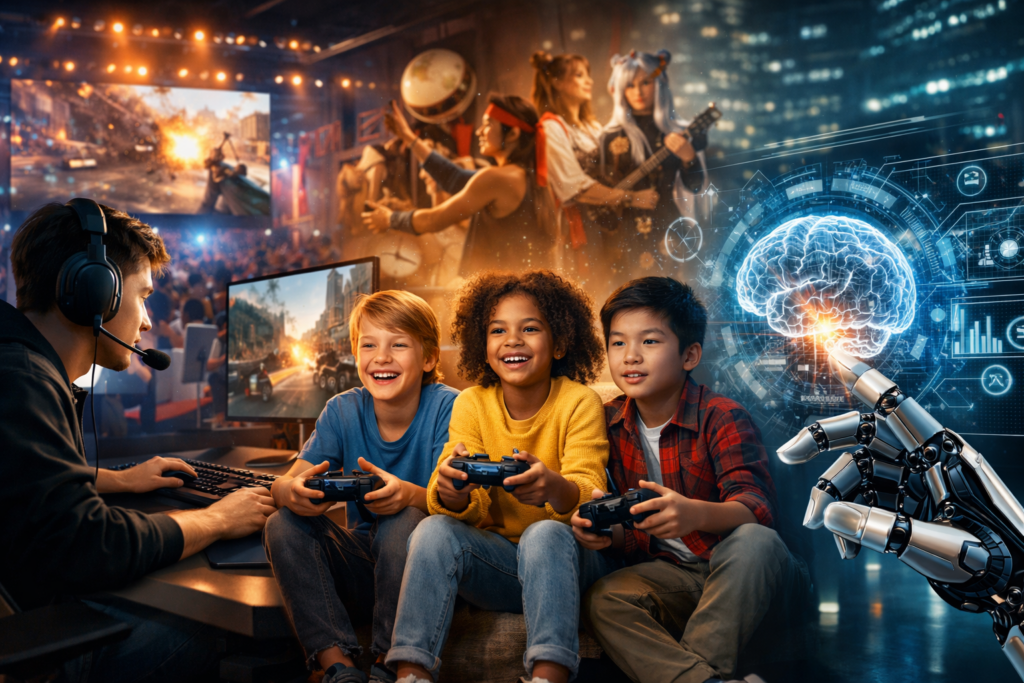
What Makes a Game a Game?
At their core, games are structured experiences built from rules, goals, and feedback. Whether it’s chess, a cooperative board game, a mobile puzzle, or a sprawling online world, a game creates a boundary—sometimes called the “magic circle”—where ordinary actions gain new meaning. Within that boundary, choices matter, outcomes can be measured, and players are encouraged to experiment.
A useful way to think about games is as systems. They include inputs (player decisions), mechanics (the rules that process those decisions), and outputs (wins, losses, progress, narratives, or emergent stories). Even games with minimal rules, like tag, still rely on shared agreement: who is “it,” what counts as a tag, and when the round ends.
Why People Play: Motivation and Emotion
Games are compelling because they meet a range of human needs. Some players chase mastery, improving skills through practice and feedback. Others seek social connection, enjoying teamwork, rivalry, or the simple pleasure of shared attention. Many play to explore identity—trying roles, strategies, or styles that may differ from everyday life.
Well-designed games also create emotional arcs. Tension rises with risk, uncertainty, or time pressure; relief comes with successful execution; surprise appears through randomness or unexpected opponent choices. This emotional rhythm is one reason games can feel memorable even when their “story” is minimal.
- Challenge: A balanced difficulty curve keeps players engaged without feeling overwhelmed.
- Agency: Meaningful choices help players feel responsible for outcomes.
- Feedback: Clear signals—scores, animations, sound cues—teach what works and what doesn’t.
- Progress: Levels, unlocks, and skill growth provide a sense of forward movement.
Major Types of Games (and What They Offer)
Physical and Playground Games
Sports and playground games are rooted in movement, timing, and spatial awareness. They often emphasize cooperation and competition in equal measure, teaching communication, fairness, and resilience. Because rules can be negotiated on the spot, these games also develop conflict resolution and leadership.
Board and Card Games
Tabletop games shine at face-to-face interaction. They can be strategic (with long-term planning), tactical (focused on short-term decisions), or social (driven by bluffing, negotiation, or storytelling). Modern board games often use elegant mechanisms—drafting, worker placement, deck-building—to create deep decision-making without requiring complex arithmetic.
Video Games
Digital games expand the range of possible experiences: vast simulated worlds, real-time action, adaptive difficulty, or persistent online communities. They can be solitary and reflective or intensely social. Importantly, video games can track player behavior and respond instantly, offering personalized challenges and frequent feedback loops.
Serious Games and Gamified Systems
Not all games exist purely for entertainment. “Serious games” aim to teach skills, support therapy, or model real-world systems. Gamified systems borrow design elements—points, streaks, badges—to encourage engagement. The difference matters: a serious game is a game first, while gamification may add game-like layers to non-game tasks, sometimes effectively and sometimes superficially.
Games as Learning Tools
Games are powerful teachers because they make learning active. Instead of passively absorbing information, players test hypotheses, witness consequences, and adjust strategies. This mirrors how people learn many real-world skills: practice, feedback, refinement.
In education, games can support:
- Systems thinking: Understanding how parts interact, from ecosystems to economies.
- Language and literacy: Vocabulary building, comprehension, and narrative sequencing.
- Problem-solving: Pattern recognition, logic, and creative experimentation.
- Collaboration: Role clarity, communication, and shared goals.
However, the best learning games respect the player. They integrate the educational content into the mechanics rather than interrupting play with quizzes. When learning feels like a natural consequence of playing well, motivation tends to be stronger and more durable.
Culture, Community, and Identity
Games help build communities. Local gaming groups gather around tables; sports fans rally around teams; online communities form around shared challenges, strategies, and humor. Streaming and video platforms have further transformed games into spectator experiences, where personality, commentary, and creativity are part of the appeal.
Games also reflect culture—its values, conflicts, and aspirations. Designers choose what to reward, what to punish, and what kinds of characters and stories to include. As a result, games can broaden representation and empathy, but they can also reinforce stereotypes if handled carelessly. The medium’s reach makes thoughtful design and criticism increasingly important.
The Business and Technology Behind Modern Games
Today’s game industry spans indie studios to massive global publishers. Distribution has shifted toward digital storefronts, subscriptions, and free-to-play models. These changes can lower barriers to entry and support ongoing updates, but they also raise questions about monetization and player well-being—especially when rewards are tied to time-limited events or randomized purchases.
Technological progress continues to reshape what games can be. Advances in graphics, physics, networking, and accessibility tools have expanded audiences. Artificial intelligence supports smarter opponents, procedural content generation, and personalization. Meanwhile, cross-platform play and cloud streaming reduce hardware barriers, letting more people participate in shared worlds.
Healthy Play: Benefits and Boundaries
Like any powerful medium, games can be beneficial or harmful depending on context. They can reduce stress, foster friendships, and provide a sense of competence. They can also crowd out sleep, exercise, or responsibilities when boundaries are unclear. A healthy approach focuses on intentional play: choosing experiences that align with one’s goals and balancing gaming with other needs.
- Set time boundaries: Use built-in timers or personal schedules.
- Prioritize quality: Choose games that leave you feeling energized or satisfied, not drained.
- Play socially when possible: Shared play often increases enjoyment and accountability.
- Watch for frictionless spending: Review purchases and disable impulsive payment options if needed.
Where Games Are Headed
The future of games will likely be defined by accessibility, community creativity, and evolving forms of storytelling. Tools for user-generated content are becoming more powerful, letting players build levels, scenarios, and even entire games. At the same time, designers are experimenting with calmer, more inclusive experiences alongside competitive spectacles like esports.
Ultimately, games endure because they transform effort into meaning. They invite us to try, fail, improve, and share the journey. Whether you play for strategy, story, movement, or connection, games offer a unique space where rules create freedom—and where play becomes a serious way to understand ourselves and the world.